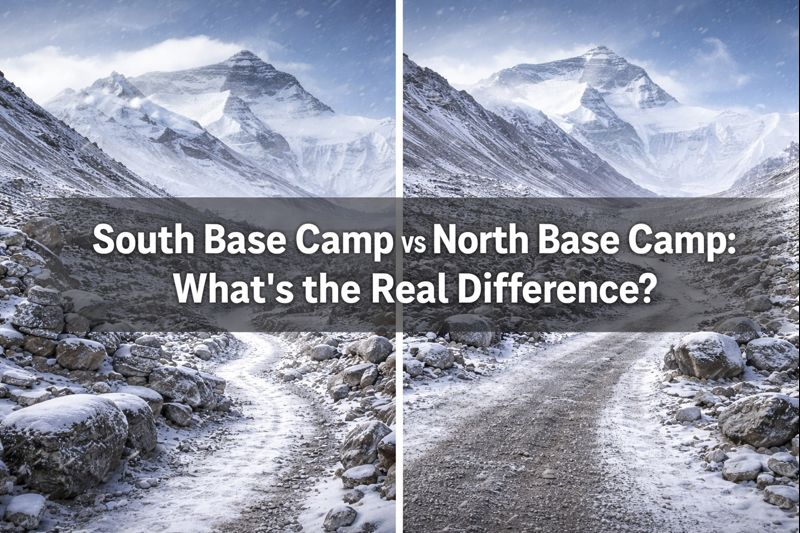
When people begin researching Mount Everest, one confusing question almost always appears early on:
Is there more than one Everest Base Camp?
The answer surprises many first-time readers. Yes—there are two Everest Base Camps. One lies in Nepal (South Base Camp), and the other is in Tibet (North Base Camp). While both serve the same purpose for climbers attempting Everest, the experience, access, culture, and journey to each camp are completely different.
In this blog, you’ll learn exactly what separates South Base Camp from North Base Camp—how you reach each one, what kind of experience they offer, who each route is best suited for, and how to decide which base camp truly aligns with your travel goals. By the end, this common Everest question will feel clear, simple, and easy to answer.
What is Everest Base Camp, Really?
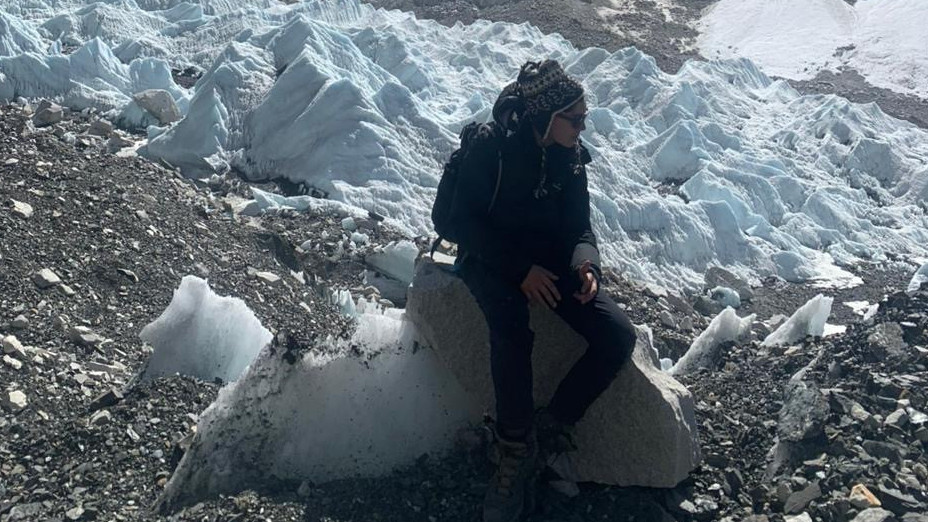
Everest Base Camp is not the summit, and it is not a tourist attraction in the traditional sense. It is a temporary settlement established by climbers as a staging point before attempting the ascent of Mount Everest. During the main climbing seasons, Base Camp transforms into a small, functional community—rows of colorful tents spread across glacial terrain, filled with climbers, guides, Sherpas, cooks, and support teams preparing for weeks or even months on the mountain.
What many people don’t realize is that the experience of reaching Everest Base Camp is shaped entirely by which side of the mountain you approach. The journey, landscape, cultural exposure, and level of physical effort can feel completely different depending on whether you reach Base Camp from the southern route in Nepal or the northern route in Tibet. Understanding this distinction is essential, because while both camps serve the same purpose for climbers, the path leading to each tells a very different story.
South Base Camp (Nepal Side)
South Base Camp, located on the Nepalese side of Mount Everest, sits at an altitude of approximately 5,364 meters (17,598 feet) within the Khumbu region of Sagarmatha National Park, a UNESCO World Heritage Site. This is the most famous and widely visited of the two Everest Base Camps, largely because it is accessible by trekking and offers a deep cultural and natural experience along the way. South Base Camp serves as the primary staging area for climbers attempting Everest via the southern route and comes alive during climbing seasons with expedition tents, Sherpa teams, and support crews. Surrounded by glaciers and towering Himalayan peaks, it is not only a functional base for mountaineering but also a powerful destination that represents the culmination of one of the world’s most iconic trekking journeys.
Location and Altitude
- Country: Nepal
- Altitude: ~5,364 meters (17,598 feet)
- Region: Khumbu, Sagarmatha National Park
How You Reach South Base Camp
Reaching South Base Camp is not something done by road or vehicle—it is a journey on foot, and that is what makes it so meaningful. Most trekkers begin by flying from Kathmandu to Lukla, landing at one of the world’s most famous mountain airstrips. From there, the trek unfolds over approximately 12 to 14 days for a round trip, allowing the body to gradually adapt to altitude. Along the way, trekkers pass through well-known Sherpa villages such as Phakding, Namche Bazaar, Tengboche, Dingboche, and Lobuche, each offering its own landscape, culture, and rhythm of life. This entire route is known as the Everest Base Camp Trek, widely regarded as one of the most iconic trekking experiences on Earth—not just for its destination, but for the journey itself.
In Short
-
Fly from Kathmandu to Lukla
-
Walk for 12–14 days round trip
-
Pass through villages like Phakding, Namche Bazaar, Tengboche, Dingboche, and Lobuche
Experience Along the Way
The trek to South Base Camp is as important as the destination itself.
You experience:
-
Sherpa villages and daily mountain life
-
Buddhist monasteries and prayer wheels
-
Suspension bridges over deep valleys
-
Gradual acclimatization to altitude
-
Changing landscapes from forest to glacier
By the time you reach Base Camp, you feel connected to the land, people, and mountains.
Who South Base Camp Is For
South Base Camp is ideal for:
-
Trekkers and hikers
-
First-time high-altitude travelers
-
People seeking cultural immersion
-
Adventure travelers who want a meaningful journey
-
Photographers and storytellers
You do not need climbing experience to reach South Base Camp.
North Base Camp (Tibet Side)
North Base Camp, located on the Tibetan side of Mount Everest in the Tibet Autonomous Region of China, sits at an altitude of approximately 5,150 meters (16,900 feet). Compared to its southern counterpart in Nepal, North Base Camp is far less visited by trekkers and remains a quieter, more remote experience. The landscape here feels stark and vast, shaped by the high-altitude Tibetan plateau rather than forested valleys and villages. From this side, Everest’s north face rises dramatically, offering a powerful and unobstructed view of the mountain’s immense scale. Access to North Base Camp is more restricted due to travel regulations and permit requirements, which further limits visitor numbers. As a result, the experience feels more isolated and less immersive in local village life. While it serves the same functional purpose for climbers preparing to ascend Everest, North Base Camp offers a very different atmosphere—one that emphasizes solitude, wide open terrain, and the raw presence of the mountain itself rather than a long, culturally rich journey.
Location and Altitude
-
Country: Tibet Autonomous Region, China
-
Altitude: ~5,150 meters (16,900 feet)
North Base Camp sits on the Tibetan side of Everest and is far less visited by trekkers.
How You Reach North Base Camp
North Base Camp is reached primarily by vehicle, not by long treks.
Travelers typically:
-
Drive from Lhasa across the Tibetan Plateau
-
Follow paved roads toward Everest
-
Spend limited time hiking
The journey is shorter and more direct, with fewer walking days.
Experience Along the Way
The approach to North Base Camp focuses more on:
-
Vast open landscapes
-
High-altitude desert scenery
-
Panoramic views of Everest’s north face
Cultural interaction is more limited, and the journey feels less immersive than the Nepal side.
Who North Base Camp Is For
North Base Camp suits:
-
Travelers with limited time
-
People unable to trek long distances
-
Those interested in Everest views without long hikes
-
Travelers already visiting Tibet
Access is more restricted and depends on Chinese travel regulations and permits.
Key Differences at a Glance
|
Feature |
South Base Camp (Nepal) |
North Base Camp (Tibet) |
|
Access |
Trekking |
Mostly by road |
|
Cultural experience |
Very high (Sherpa villages, monasteries) |
Limited |
|
Trek difficulty |
Moderate |
Low |
|
Permits |
Nepal permits |
Chinese permits |
|
Popularity |
Very high |
Much lower |
|
Scenic journey |
Forests, valleys, glaciers |
High-altitude plateau |
|
Best for |
Trekkers & adventure seekers |
Sightseers & short trips |
Which Base Camp Do Climbers Use to Summit Everest?
Both the South Base Camp (Nepal side) and the North Base Camp (Tibet side) are used for climbing Mount Everest, but in modern times, the South Base Camp route has become the preferred and more widely used option among climbers. One of the main reasons for this is the stronger and more developed logistical support available on the Nepal side, including established trekking routes, supply chains, and communication systems. The presence of an experienced Sherpa support network also plays a crucial role, as Sherpa climbers and guides bring generations of knowledge, skill, and familiarity with the mountain’s conditions. Additionally, the southern route offers well-established acclimatization schedules and rescue systems, which are critical for safety in such an extreme environment. Helicopter access for emergency evacuations, although limited by altitude and weather, is generally more accessible from the Nepal side. Because of these advantages, the majority of historic expeditions and most modern climbing attempts continue to begin from South Base Camp, making it the most active and trusted route for summiting Mount Everest today.
Which One Should You Choose?
If your goal is:
-
Trekking
-
Cultural experience
-
Personal challenge
-
A journey that unfolds slowly
South Base Camp in Nepal is the clear choice.
If your goal is:
-
Seeing Everest without long walks
-
Traveling by road
-
Shorter time commitment
North Base Camp may suit you better, if permits allow.
Why South Base Camp Is More Than a Destination
South Base Camp is more than just a destination on a map—it is the outcome of days of steady effort, patience, and physical and mental adjustment. Every step toward it is earned through early mornings, long walks, and a gradual acceptance of the mountain’s pace. The journey does not rush you. Instead, the landscape unfolds slowly, allowing the mountains to reveal themselves piece by piece rather than all at once. This process creates a deep sense of connection, not only with Everest but with the entire Himalayan environment that surrounds it.
Many people who complete the trek say that the experience changes them, and not simply because they reached Everest Base Camp. The transformation comes from the journey itself—the discipline required to keep going, the humility learned at high altitude, and the quiet moments of reflection along the trail. By the time trekkers arrive at South Base Camp, they often realize that the value of the experience lies not in the final destination, but in everything the path taught them along the way.
Final Thoughts
South Base Camp and North Base Camp both lead to the same mountain, but they offer very different experiences.
One is a walk through culture, landscape, and time.
The other is a direct window into Everest’s scale.
Neither is wrong—but only one allows you to truly walk into the Himalayas.
For most travelers and trekkers, South Base Camp in Nepal is where the Everest journey truly begins.